
Latest News
Housing Acquisitions by Individuals and Corporations: An Analysis of July 2026 Transaction Volumes
2026/11/16
Market Forecast Column

Understanding the real estate market requires looking at transaction volumes as well as prices. Differences in acquisition trends between individuals and corporations, and across housing types, can provide useful insights for investment decisions.
Data published by Japan’s Ministry of Land, Infrastructure, Transport and Tourism (MLIT) for July 2026 show that corporate housing acquisitions declined, while acquisitions by individuals increased slightly. This article examines two transaction volume indices to explore market trends and the key points investors should consider.
Two Indices Tracking Individual and Corporate Acquisitions
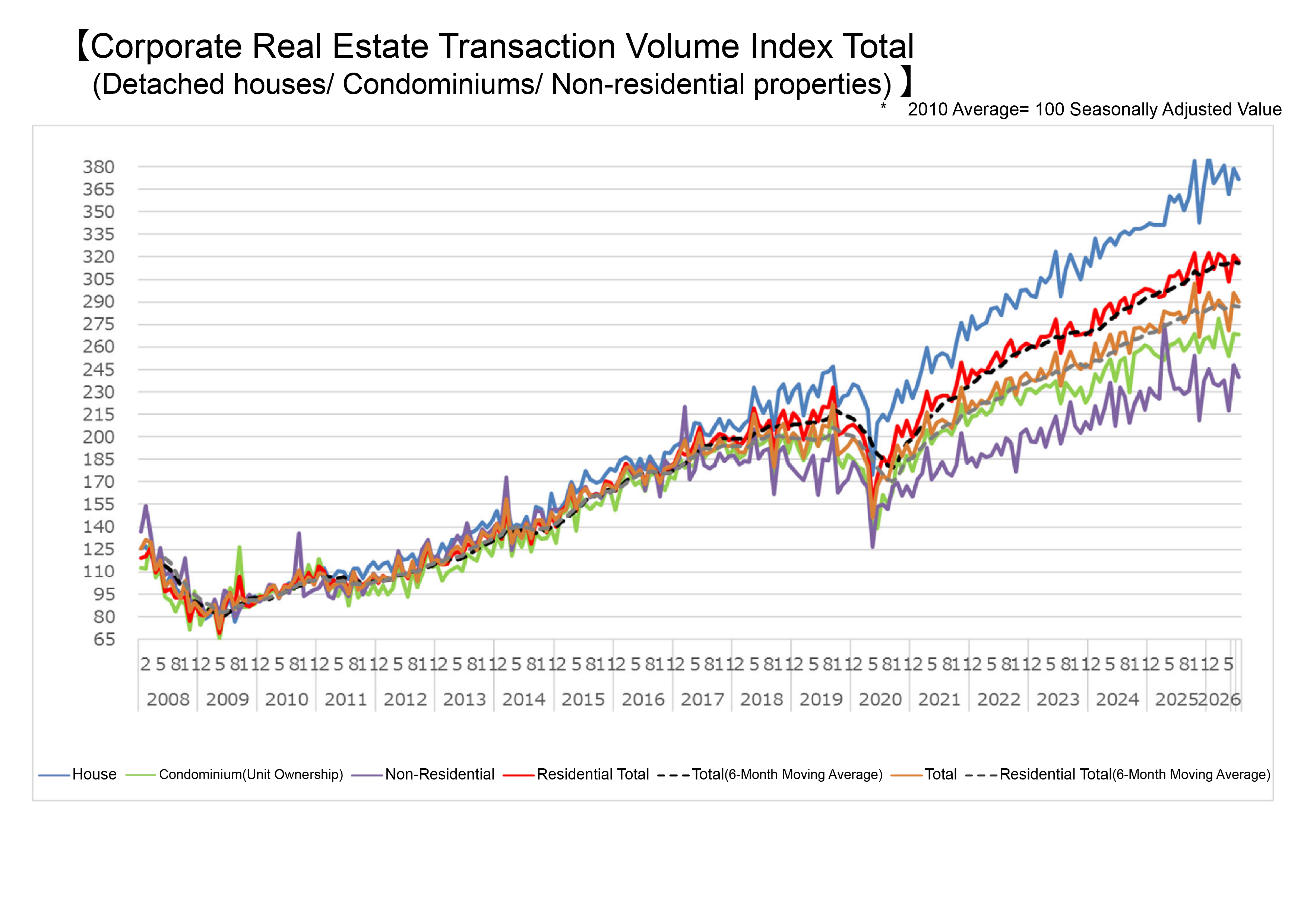
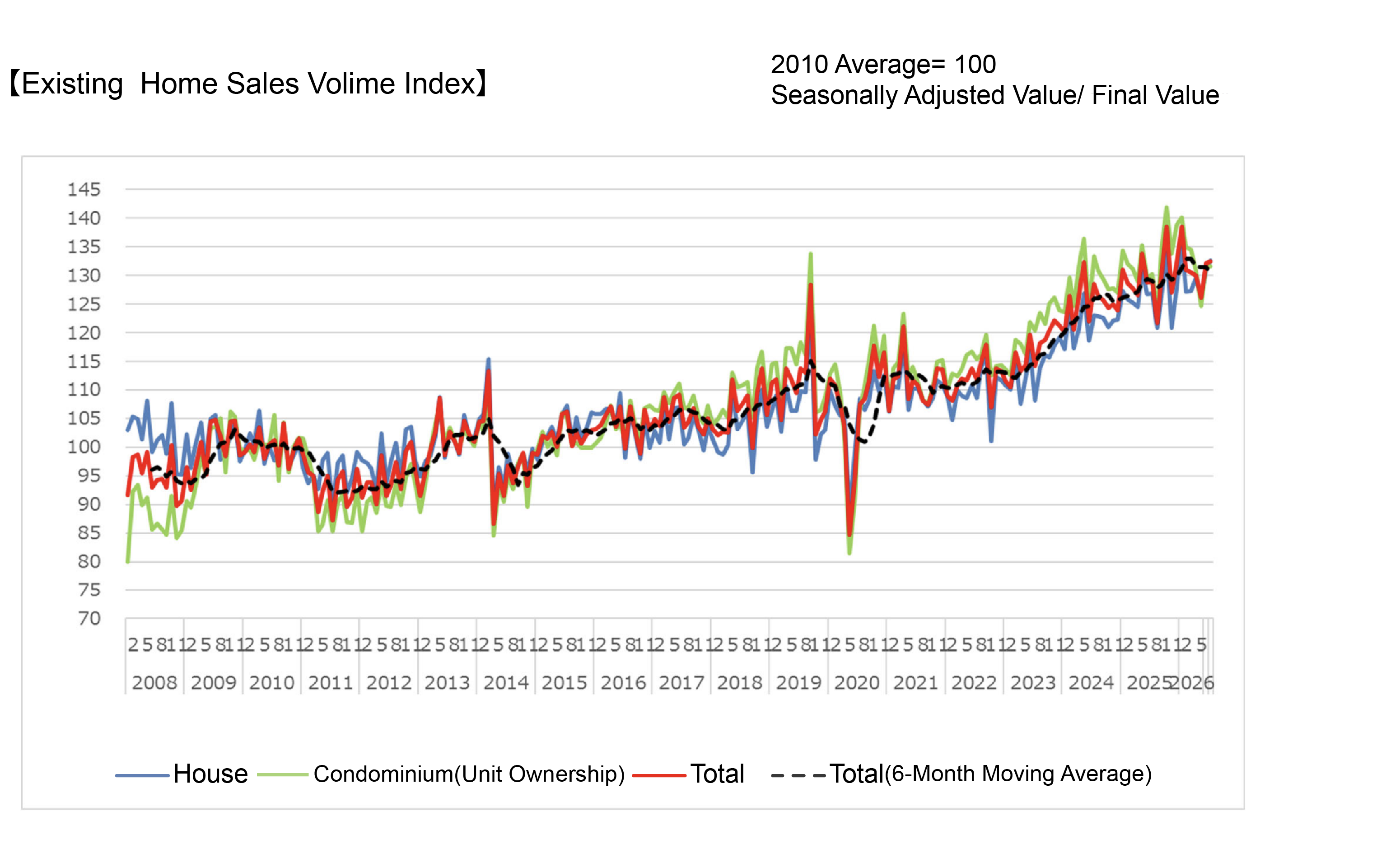
The Corporate Property Transaction Volume Index measures transactions involving existing residential and non-residential buildings acquired by corporations. The Existing Home Sales Volume Index, meanwhile, covers existing homes acquired by individuals. Both indices are compiled from ownership transfer registration data associated with property sales.
The figures discussed here are seasonally adjusted, with the 2010 average set at 100. Seasonal adjustment makes them useful for tracking month-to-month changes in transaction volumes. However, each index measures changes relative to its own base-year level; the index values cannot be used to directly compare the number of transactions by individuals and corporations.
Corporate Acquisitions Decline, with a Larger Drop in Non-Residential Properties
In July, the combined residential and non-residential Corporate Property Transaction Volume Index stood at 290.1, down 2.1% from the previous month. The residential index fell 1.4% to 316.9, while the non-residential index declined 3.1% to 240.1.
Within the residential category, the detached-house index fell 1.9% month on month to 371.7, while the condominium index decreased 0.3% to 268.2. Acquisition volumes declined in both residential and non-residential properties, with detached houses recording a larger percentage decline than condominiums within the residential segment.
These differences across property categories are worth considering when assessing corporate acquisition activity. However, this month’s results alone do not establish that corporations have become more cautious about acquiring real estate. The index does not reveal acquisition purposes or the reasons behind the decline, so further data are needed to determine whether the trend will continue.
Individual Acquisitions Edge Up, with Mixed Results by Housing Type
The combined detached-house and condominium Existing Home Sales Volume Index for individuals rose 0.2% month on month to 132.4. Excluding condominiums smaller than 30 m², the combined index increased 0.6% to 120.8.
By housing type, the detached-house index rose 1.1% to 132.5, while the condominium index declined 0.4% to 131.5. The condominium index excluding units smaller than 30 m² also fell 0.4%, to 106.1. This indicates that the increase in individual acquisitions was not shared across all housing types.
Detached-house acquisitions moved in opposite directions for the two buyer groups, increasing among individuals and declining among corporations. Condominium acquisitions decreased slightly among both groups. Examining buyer groups alongside housing types provides a more detailed picture of the market than looking at the overall change alone.
Acquisitions by individuals include investment properties and vacation homes, as well as homes purchased for personal use. An increase in individual acquisitions therefore cannot automatically be interpreted as growth in demand for owner-occupied housing.
Investors Should Watch Whether These Trends Continue
For investors, transaction volumes can inform both acquisition decisions and plans for a future sale. For example, when purchasing a detached house with the intention of eventually selling it to an individual buyer, individual acquisition trends offer one way to assess the potential resale market.
However, an increase in nationwide transaction volumes does not necessarily mean that a particular property will be easier to sell. Investors should review completed sales, available listings, and the time taken to sell properties in the target area, while considering conditions specific to the location and price range.
Although condominium acquisitions declined among both individuals and corporations, the decreases were small. Rather than interpreting a single month’s results as a market turning point, investors should examine trends over the latest three to six months and compare activity with the same period a year earlier to determine whether the decline is continuing.
Assess Transaction Volumes Alongside Profitability
The latest data show that corporate acquisitions declined in both residential and non-residential properties, while housing acquisitions by individuals increased slightly. Detached houses showed a particularly clear difference between the two buyer groups. Whether this pattern continues will be an important point to monitor.
However, the two indices measure changes in transaction volumes. They do not indicate whether properties are undervalued or overvalued, nor do they provide information on rents or investment yields. Even in segments where transaction volumes are rising, profitability will vary depending on purchase prices and ongoing ownership costs.
Investment decisions should combine an understanding of transaction trends with an assessment of the target property’s rental income, vacancy risk, repair costs, and financing terms. Considering broader market trends alongside the conditions of each property supports decisions that account for the full investment period, from acquisition through to sale.
For more information