
Latest News
Japanese Government Strengthens Measures Against Vacant Houses – Model Projects Start in 2025
2025/8/29
Government Policies on real estate markets
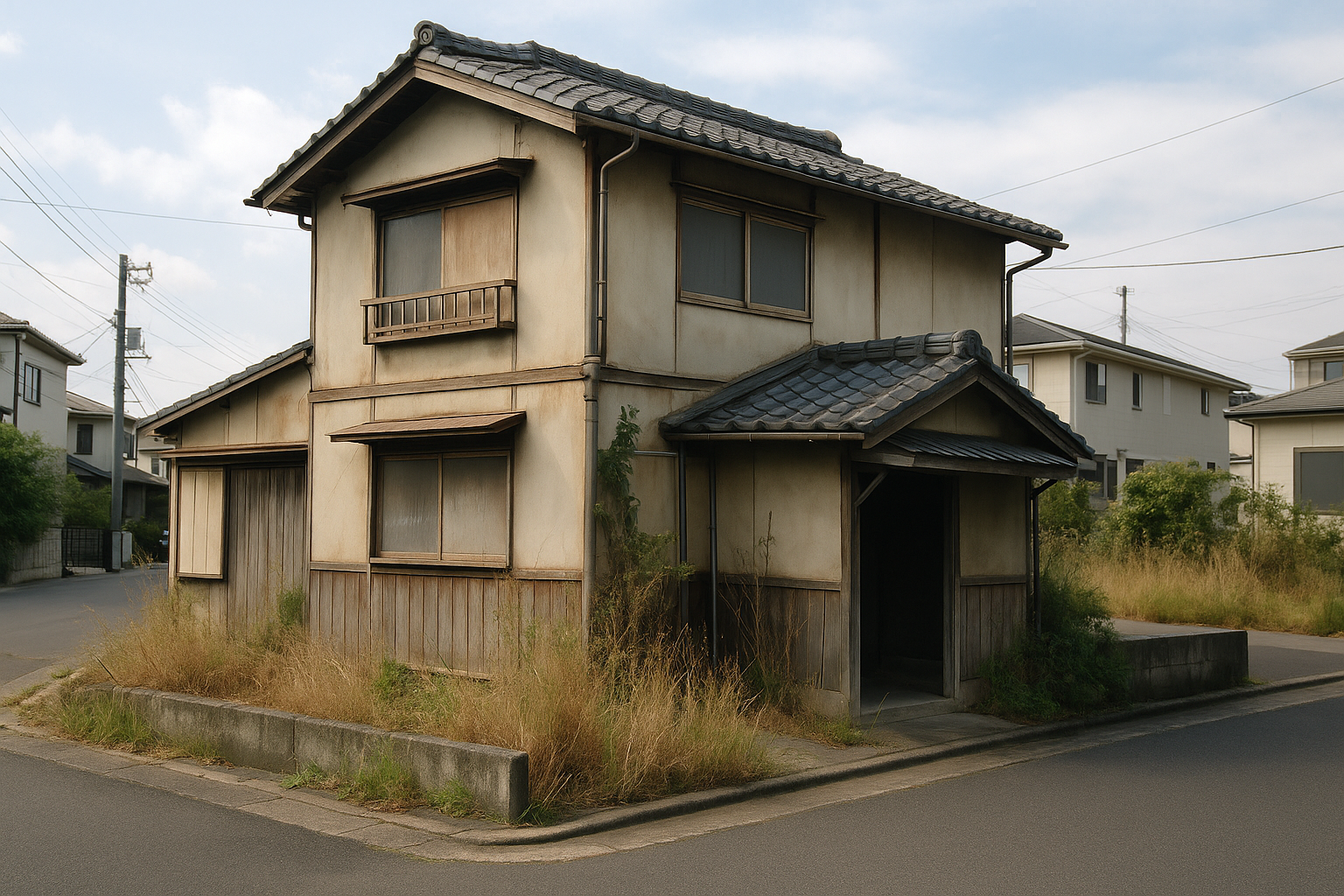 According to the Ministry of Internal Affairs and Communications, the number of vacant houses in Japan has reached about 9 million, with a vacancy rate of 13.8%, the highest ever recorded. With depopulation, an aging society, and population concentration in major cities, vacant houses are increasing, especially in rural and suburban areas, leading to safety risks, deterioration of scenery, and declining property values.
To address this, the government has stepped up reforms and support. The 2023 amendment to the Act on Special Measures Concerning Vacant Houses introduced a new category, “potentially unmanaged vacant houses,” enabling municipalities to intervene before properties become hazardous. Nonprofits and private organizations can also be certified as “management and utilization support corporations” to provide consultation and matching services for owners.
Tax incentives and subsidies have also been revised. If a property is designated as “unmanaged,” fixed asset tax reductions no longer apply. Conversely, up to 30 million yen of capital gains can be tax-exempt when selling inherited vacant houses (extended until 2027). Subsidies for demolition and renovation have been expanded to support owners’ decisions.
The year 2025 will serve as a “model year” for these initiatives. The Ministry of Land, Infrastructure, Transport and Tourism is soliciting projects nationwide under three themes: consultation systems, business model development, and lifestyle-based utilization. Both research and publicity, as well as renovation and demolition, will be eligible, with one-third of renovation costs and two-fifths of demolition costs subsidized.
Vacant houses pose risks but can also become investment opportunities if subsidies and tax benefits are utilized. Experts emphasize that “with investor participation, vacant houses can evolve from a social issue into assets that connect local communities and capital.”
For details on these mechanisms and investment case studies, see the full blog article.
https://member.glocaly.tokyo/en/client/blog-detail/224
For more details, please visit the GLOCALY member page! More information is waiting for you!
For more information